
Garment Care Tips
For additional tips, visit NCA Care Tips.
1. Don't wear good clothes when brushing teeth.

2. Remove the plastic covering your garments as soon as you get home.

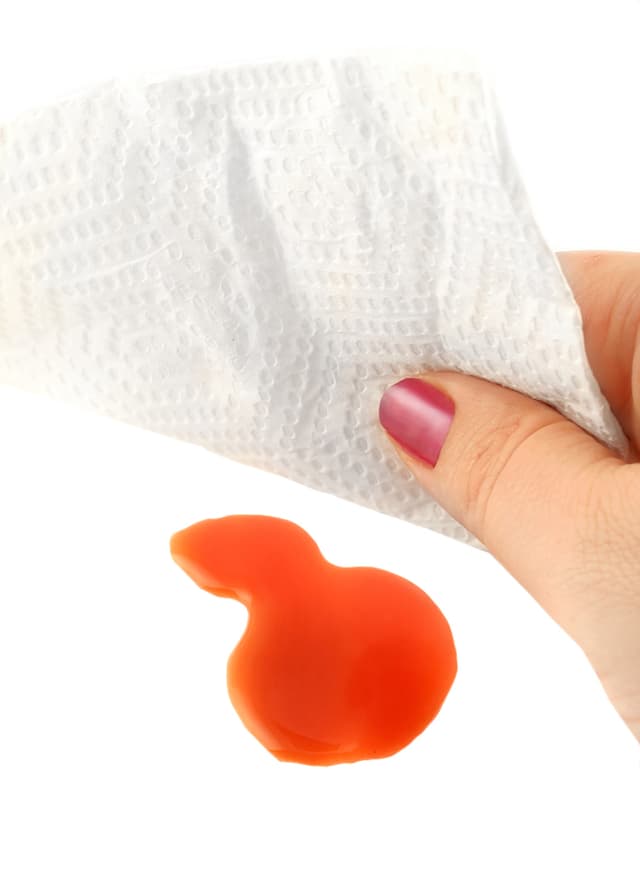
3. Gently remove excess. Blot don't rub, and avoid the temptation to try a “home remedy.”
Frequently Asked Questions
Care Label Symbols
Some garments labeled as "Dry clean only" are being damaged through the dry cleaning process. This is due to improper labeling by the manufacturer. The Care Labeling Regulations require manufacturers to "pretest" garments to ensure the label represents appropriate care. When a label says "Dry clean" but damage occurs, the garment should be returned to the store where it was purchased — this is a violation of Care Labeling Regulation 16 CFR 423.
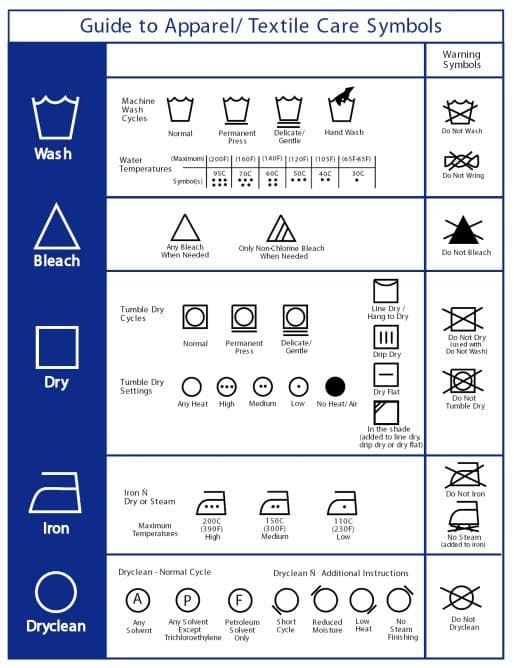
What is the Care Labeling Rule?
The Care Labeling Rule was issued by the Federal Trade Commission in 1971 to help consumers with clothing care. The rule states that manufacturers must tag their clothing with at least one safe cleaning method. Beginning July 1, 1997, manufacturers may use certain care symbols in place of words on labels.
What information is required on the care label?
Care labels for textile wearing apparel must provide either washing or dry cleaning instructions. Only one safe method of care is required to be provided by the manufacturer. The label must also warn against any procedure that might harm the item — including washing, bleaching, drying, ironing, or dry cleaning.
Does washable also mean my garment can be dry-cleaned?
Not always. Only one safe method of care has to be listed. The label does not have to warn about other cleaning methods which might prove unsafe. Clothing labeled "washable" may not dry clean well.
What if the care instructions don't work?
If you followed the care instructions and problems result, return the garment to the store where you bought it. The safe cleaning method listed on the care label is, in effect, a care warranty. Ask for an exchange or refund. If the store won't help, contact the manufacturer directly.
You can also contact the Federal Trade Commission by writing to: Consumer Response Center, Federal Trade Commission, Washington, DC 20580. Although the FTC cannot resolve individual disputes, the information you provide may indicate a pattern of violations requiring Commission action.